
MagentoShopify
Magento got expensive just to keep running.
PCI scans, hosting, security patches and extensions that fight each other. You pay more every year for a store that gets harder to use. There's a better way to run it, and I've moved stores just like yours.
 Fifteen minutes with me, Christopher Lang. No pitch deck.
Sound familiar?
Keeping Magento alive has turned into a second job.
If two or more of these sound like your week, keep reading. On Shopify, the hosting, security and updates are handled for you, so your team runs a business, not a server.
-
01
PCI costs keep climbing
Scanners, hosting and compliance every month, before you've sold a thing.
-
02
Held together with patches
Every update breaks an extension. Every fix needs a developer.
-
03
Too heavy for your team
Magento was built for big teams. Yours spends the day working around it.
-
04
Phones don't buy
Most of your visits come from phones, and most of them leave without buying.
What's really stopping you
You've thought about leaving. Then the what ifs start.
Nobody stays on Magento because they love it. They stay because moving feels like a bigger risk than staying put.
The voice in your head
- “We'll lose years of Google rankings.”
- “What if data goes missing?”
- “Will it work with our back office?”
- “Can my team even learn it?”
- “The surprises will cost a fortune.”
- “We can't launch in busy season.”
- “Then we're on our own after launch.”
Every one of those is fair. Things will work differently, and nobody can tell you exactly how until the work starts. That's the part I'm here for.
I've seen this before
H2oWear had the same problems. Here's how their move went.
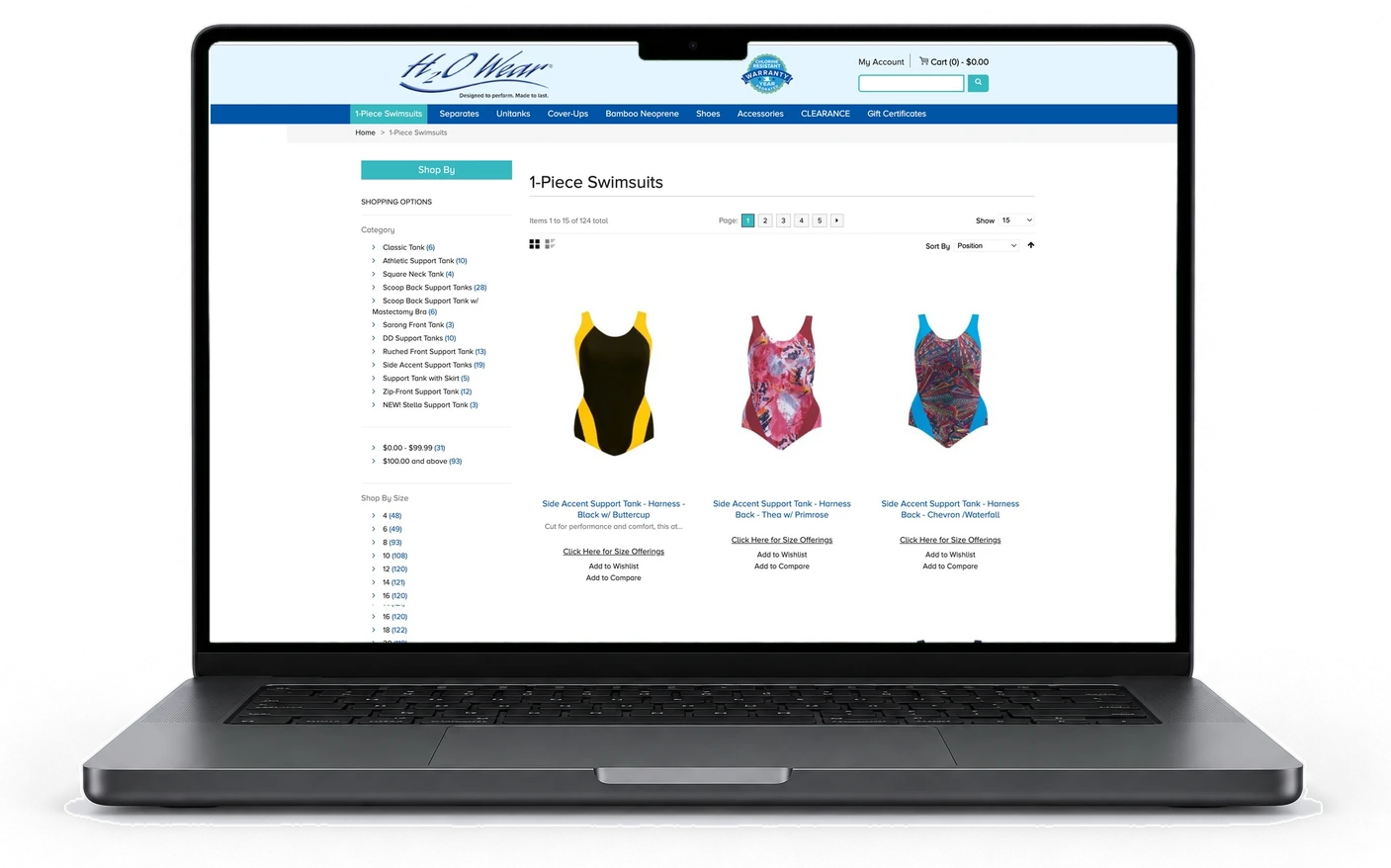
H2oWear sells swimwear online and ran on Magento 2 with everything above: the PCI scanning their bank required, a stack of paid extensions, and security patches that never stopped coming. I moved them to Shopify.

Wondering how a move would go for your store?
Bring your questions. I'll give you straight answers.
Your worries, answered
Every one of those fears has an answer.
Here is what actually happens to each of them when you make the move with me.
-
“We'll lose our rankings.”
Every old URL gets redirected to its new page. For H2oWear, that was 1,129 of them.
-
“Data will go missing.”
Customers, orders and history come over, and then they get checked. H2oWear: 116,000 customers and five years of orders.
-
“Will it fit our back office?”
The store gets built around how your business already runs, and I simplify the parts that fight it.
-
“Surprises will cost a fortune.”
One fixed price, agreed before the work starts. No hourly billing, no surprise invoices.
-
“Can my team learn it?”
I train them myself, on your own store. H2oWear's team was up and running faster than they expected.
-
“We can't launch in busy season.”
We pick the launch date together, around the season that pays for your year.
-
“We'll be on our own after launch.”
You won't. I stay for 30 days after launch. Here's how that works.
How it works
Three phases. And launch day isn't the finish line.
You work with me from the first phase to the last, not an account manager.
-
Phase 1
Clarity Audit
Once you've hired me, I start in your data: where shoppers come from, where they drop off, and everything that has to come over from Magento. You see the plan before a single page is built.
-
Phase 2
The Clean Move
I map how your business runs, from a customer's first click to their next order, build the store around it, and move everything over: products, customers, order history and every old URL.
- Launch day
-
Phase 3
The Break-In Period
30 days after launchLaunch day is test day. I stay, watch how your team and your customers use the store, and fix and tweak whatever they trip on, at no extra cost. Your team gets trained along the way.
The launch isn't the finish line.
Bring me your worries about leaving Magento.
Fifteen minutes. Tell me what's keeping you on it, and I'll tell you honestly how the move would go for your store.
Book a 15 minute call- 15 minutes
- One on one with me
- No pitch deck, no pressure